


Personnel Certification in Non-Destructive Testing
PCN
PCN (Personnel Certification in Non-Destructive Testing)
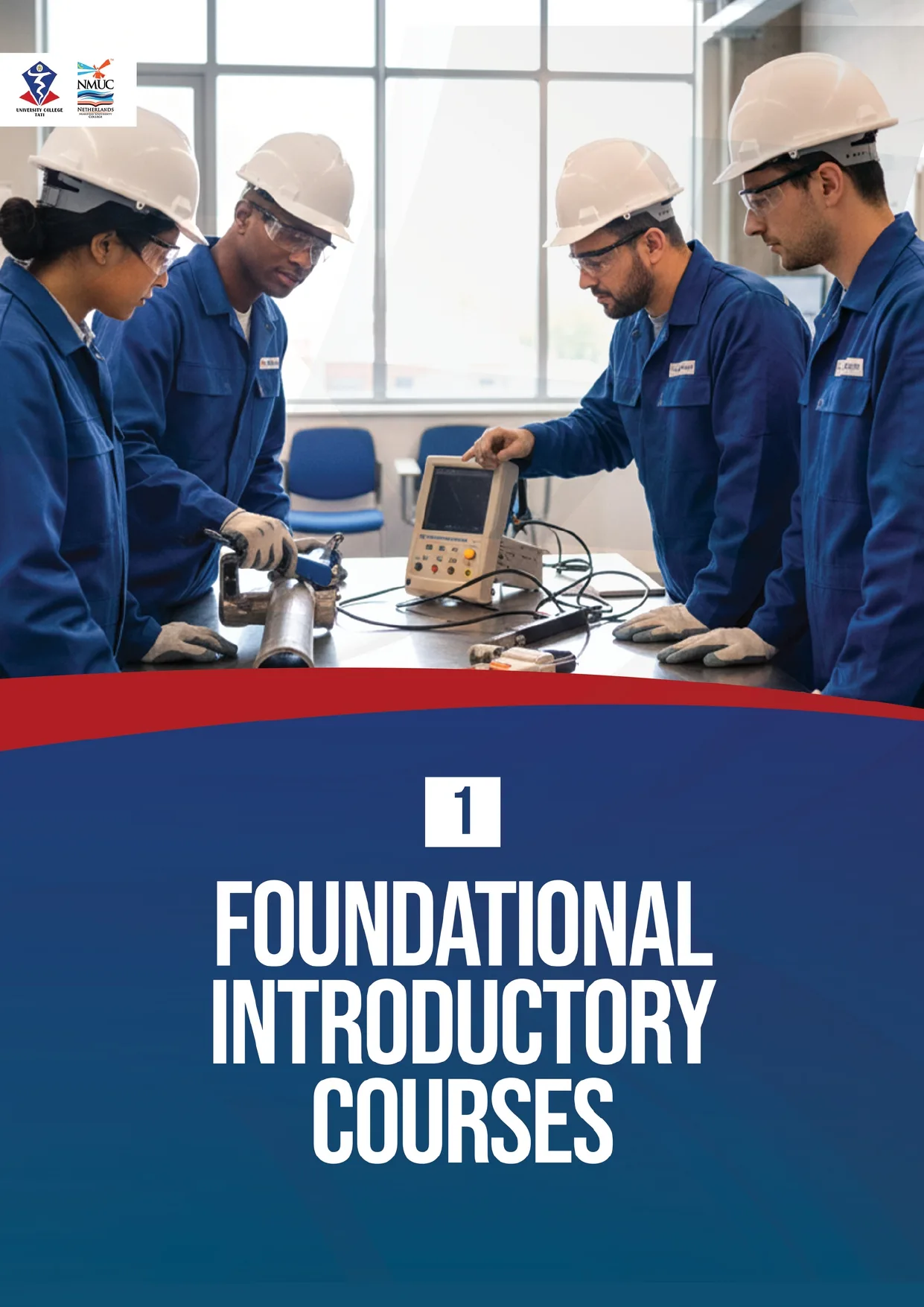
Foundational Introductory
Training Locations : Johor & Terengganu-
Hybrid learning system available: Physical, Online, or a combination of both.
-
Most modules involve : Hands-on physical training.
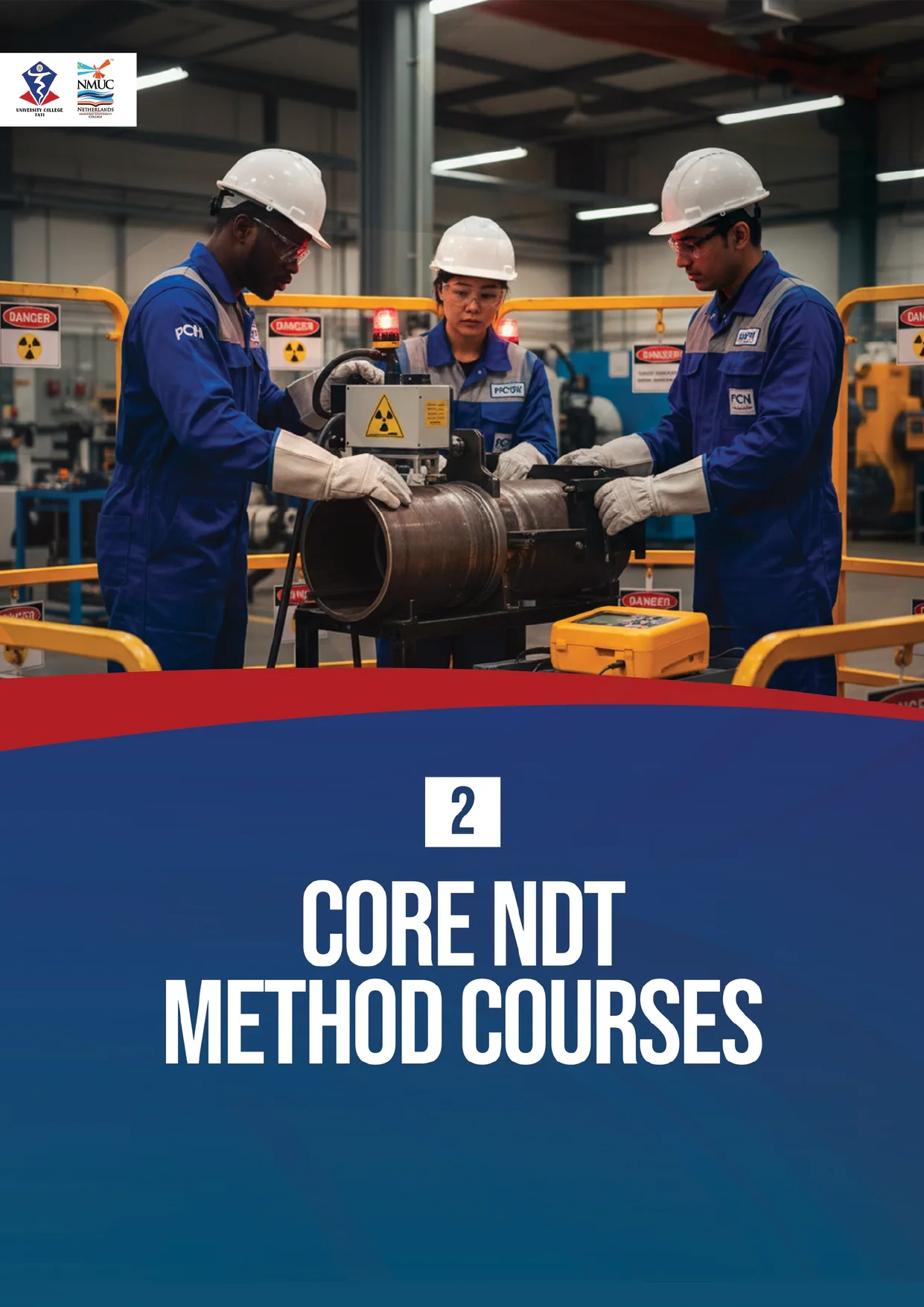
Core NDT Method
Training Locations : Johor & Terengganu-
Hybrid learning system available: Physical, Online, or a combination of both.
-
Most modules involve : Hands-on physical training.
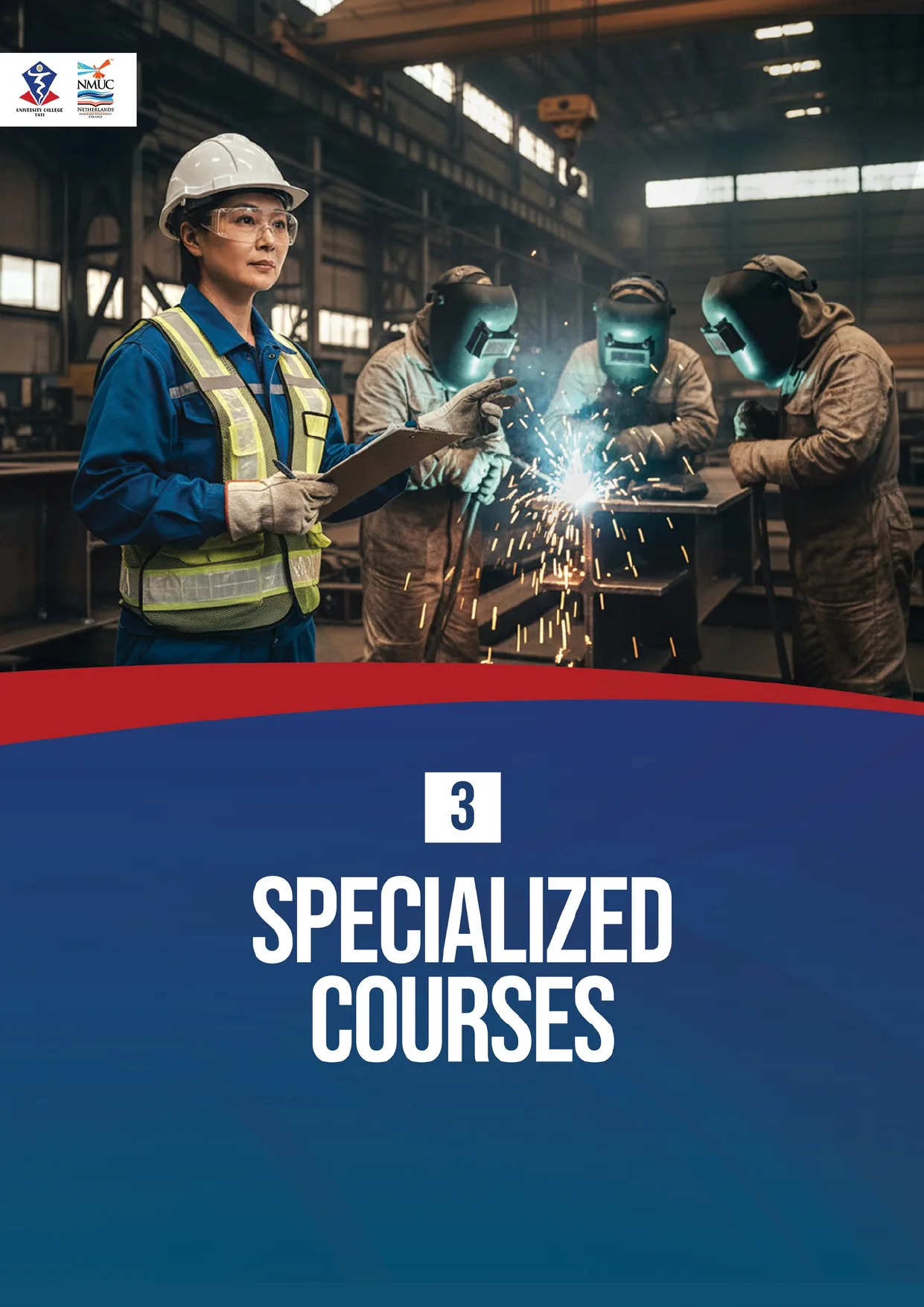
Specialized Courses
Training Locations : Johor & Terengganu-
Hybrid learning system available: Physical, Online, or a combination of both.
-
Most modules involve : Hands-on physical training.
Course Overview
Course Overview
INTRODUCTORY TECHNICAL COURSES
- Non-Destructive Testing (NDT) Appreciation/ Introduction (RTO/NDT 4)
– A foundational course providing an overview of NDT principles, methods, and applications across various industries. Ideal for beginners and those seeking a general understanding of NDT. - Product technology (RTO/PRT 4)
– Provides a fundamental knowledge of materials, manufacturing processes (welding, casting, forging) and associated metallurgy relevant to inspection.
ULTRASONIC TESTING (UT)
- UT Level 1 (RTO/UT 1)
– This course is a combination of the Ultrasonic Testing Introduction course with appropriate Ultrasonic Testing theory and practical training. This course is PCN recognized and provides excellent preparation for Ultrasonic Testing Level 1 examination. it meets in full the training hour requirements as specified by the relevant pCN documentation. - UT Level 2 (RTO/UT 2)
– This course is a combination of the UT introduction course with appropriate Ultrasonic Testing theory and practical training. This course is PCN recognized and provides excellent preparation for Ultrasonic Testing Level 2 examinations. It meets in full the training hour requirements as specified by the relevant PCN documentation.
RADIOGRAPHIC TESTING (RT)
- RT Level 1 (SKM/RT 1)
– This programme involves RT Theory and Practical training and is PCN recognised providing excellent preparation for the Level 1 examinations. It meets in full the training hour requirements as specified by the relevant PCN documentation. Also suitable for employer based certification schemes such as SNT-TC-1A / EN4179 / NAS410. - RT Level 2 (SKM/RT II)
– This Programme includes a combination of the RT Interpretation and RT Theory and Practice course. PCN recognised and provides excellent preparation for the level 2 examination. It meets full training hour requirements as specified by the relevant PCN documentation. This course is also suitable for employer based certification schemes such as SNT-TC-1A / EN4179 / NAS410.
RADIOGRAPHIC TESTING (RT)
- RT Level 2 Direct Access
– This programme includes a combination of the RT interpretation and RT Theory and Practice course. PCN recognised and provides excellent preparation for the Level 2 examination. It meets in full the training hour requirements as specified by the relevant PCN documentation. This course is also suitable for employer-based certification schemes such as SNT-TC-1A /EN4179 / NSA410. - PCN Radiographic Interpretation (RTO/IR II)
– Suitable for those who require an in-depth knowledge of the radiographic interpretation of welds. The course concentrates on the identification of weld defects, assessment of radiographic quality and sentencing to example specifications. All information necessary for candidates attempting PCN or ASNT radiographic interpreters examinations is issued.
EDDY CURRENT TESTING (ET)
- ET Level 1 (RTO/EC1)
– This course provides detailed information on the inspection of welds utilising the Eddy Current Testing method, incorporating the latest equipment. This course is suitable for beginners and personnel with an existing NDT knowledge. This course is PCN approved and provides excellent preparation for the level 1 examination as specified by the relevant PCN documentation. - ET Level 2 (RTO/EC2-D)
– This course is suitable for beginners and personel with existing NDT knowledge. Students are able to qualify straight to Level 2, (candidates must complete both Level 1 and Level 2 training courses) or build on their existing Level 1 certication. This course is PCN approved and provides excellent preparation for the Level 2 examination as specified by the relevant PCN documentation.
MAGNETIC PARTICLE TESTING (ET)
- MT Level 1 (RTO/ST1)
– Magnetic Particle Testing candidates will have the opportunity to use a large variety of equipment on welds, casting and wrought products on this theoretical and practical course. Suitable for beginners and personel with existing NDT knowledge and PCN recognised, providing excellent preparation for Level 1 MPI examinations. It meets, the training hour requirements as specified by the relevant PCN documentaion. - Mt Level 2 (RTO/ST5)
– Magnetic Particle Testing Level 2 candidates will have the opportunity to use a large variety of equipment on welds, castings and wrought products on theoretical and practical course. Suitable for beginners and personnel with existing NDT knowledge and PCN recognised, providing excellent preparation for Level 2 MPI examinations. It meets the tarining hour requirements as specified by the relevant PCN documentation. - Magnetic Particle Examination Revision
– Short term revision course intended to supplement the Magnetic Particle testing pre-approval course.
PENETRANT TESTING (PT)
- PT Level 1 (RTO/ST1)
– Candidates will have the oppurtunity to use the various techniques on welds, casting and wrought products whilst gaining detailed theoretical and practical knowledge on all the commonly encountered penetrant testing techniques. This course is suitable for beginners and personnel with existing NDT knowledge, this course is PCN recognised and provides excellent preparation for Level 1 and 2 examinations. It meets the training hour requirements as specified by the relevant PCN documentation. - PT Level 2 (RTO/ST6)
– Candidates will have the opportunity to use the various techniques on welds, castings and wrought products whilst gaining detailed theoretical and practical knowledge on all the commonly encountered penetrant testing techniques. This course is suitable for beginners and personnel with existing NDT knowledge, this course is PCN recognised and provides excellent preparation for level 1 and 2 examinations. It meets the training hour requirements as specified by the relevant PCN documentation. - Penetrant Testing Examination Revision
– Short term revision course intended to supplement the penetrant testing pre-approval course.
SPECIALIZED COURSES
- PCN Weld Inspector – PCN Level 2 (General) (RTO/QA7)
– 10 Days
Duration
INTRODUCTORY TECHNICAL COURSES
- Non-Destructive Testing (NDT) Appreciation/ Introduction (RTO/NDT 4)
– 3 Days - Product technology (RTO/PRT 4)
– 2 Days
ULTRASONIC TESTING (UT)
- UT Level 1 (RTO/UT 1)
– 5 Days - UT Level 2 (RTO/UT 2)
– 21 Days
RADIOGRAPHIC TESTING (RT)
- RT Level 1 (SKM/RT 1)
– 12 Days - RT Level 2 (SKM/RT II)
– 15 Days
RADIOGRAPHIC TESTING (RT)
- RT Level 2 Direct Access
– 26 Days - PCN Radiographic Interpretation (RTO/IR II)
– 11 Days
EDDY CURRENT TESTING (ET)
- ET Level 1 (RTO/EC1)
– 5 Days - ET Level 2 (RTO/EC2-D)
– 12 Days
MAGNETIC PARTICLE TESTING (ET)
- MT Level 1 (RTO/ST1)
– 5 Days - Mt Level 2 (RTO/ST5)
– 6 Days - Magnetic Particle Examination Revision
– 2 Days
PENETRANT TESTING (PT)
- PT Level 1 (RTO/ST1)
– 5 Days - PT Level 2 (RTO/ST6)
– 6 days - Penetrant Testing Examination Revision
– 2 Days
SPECIALIZED COURSES
- PCN Weld Inspector – PCN Level 2 (General) (RTO/QA7)
– Intended for personnel with experience in welding inspection, welder training, or welding supervision, who are wishing to consider a formal inspection certification route.
Candidate Requirement
Candidate Requirement
INTRODUCTORY TECHNICAL COURSES
- Non-Destructive Testing (NDT) Appreciation/ Introduction (RTO/NDT 4)
– SPM (Sijil Pelajaran Malaysia) or equivalent. - Product technology (RTO/PRT 4)
– SPM (Sijil Pelajaran Malaysia) or equivalent.
ULTRASONIC TESTING (UT)
- UT Level 1 (RTO/UT 1)
– SPM (Sijil Pelajaran Malaysia) or equivalent.
– Special Note: Candidates attempting a PCN examination must meet the PCN/GEN requirements. If attempting an ASNT/EN4179/NAS410 examination the requirements of your company’s written practice must be met. This course is not suitable for BGAS-CSWIP examination preparation. - UT Level 2 (RTO/UT 2)
– Diploma/Bachelor’s Degree in Welding Technology or a related engineering field is preferred or completion of UT Level 1 certification.
– Special Note: Candidates attempting a PCN examination must meet the PCN/GEN requirements. If attempting an ASNT/EN4179/NAS410 examination the requirements of your company’s written practice must be met. This course is not suitable for BGAS-CSWIP examination preparation.
RADIOGRAPHIC TESTING (RT)
- RT Level 1 (SKM/RT 1)
– SPM (Sijil Pelajaran Malaysia) or equivalent.
– Special Note: Candidates attempting a PCN examination must meet the PCN/GEN requirements. If attempting an ASNT/EN4179/NAS410 examination the requirements of your company’s written practice must be met. - RT Level 2 (SKM/RT II)
– Diploma/Bachelor’s Degree in Welding Technology or a related engineering field is preferred or completion of UT Level 1 certification.
– Special Note: Candidates must have at lease 6 months experience in Radiographic Testing to receive validation by BINDT.
RADIOGRAPHIC TESTING (RT)
- RT Level 2 Direct Access
– Diploma/Bachelor’s Degree in Welding Technology or a related engineering field is preferred or completion of RT Level 1 certification.
– Special Note: Candidates attempting a PCN examination must meet the PCN/GEN requirements. If attempting an ASNT/EN4179/NAS410 examination the requirements of your company’s written practice must be met. - PCN Radiographic Interpretation (RTO/IR II)
– Diploma/Bachelor’s Degree in Welding Technology or a related engineering field is preferred or completion of RT Level 1 certification or equivalent documented training or candidates demonstrate a minimum of [X years] of practical experience in radiographic Testing, including radiation safety procedures.
– Special Note: Candidates attempting a PCN examination must meet the PCN/GEN requirements. If attempting an ASNT/EN4179/NAS410 examination the requirements of your company’s written practice must be met. This course is not suitable for BGAS-CSWIP examination preparation.
EDDY CURRENT TESTING (ET)
- ET Level 1 (RTO/EC1)
– SPM (Sijil Pelajaran Malaysia) or equivalent.
– Special Note: Candidates attempting a PCN examination must meet the PCN/GEN requirements. If attempting an ASNT/EN4179/NAS410 examination the requirements of your company’s written practice must be met. This course is not suitable for BGAS-CSWIP examination preparation. - ET Level 2 (RTO/EC2-D)
– Diploma/Bachelor’s Degree in Welding Technology or a related engineering field is preferred or completion of ET Level 1 certification.
– Special Note: Candidates attempting a PCN examination must meet the PCN/GEN requirements. If attempting an ASNT/EN4179/NAS410 examination the requirements of your company’s written practice must be met. This course is not suitable for BGAS-CSWIP examination preparation.
MAGNETIC PARTICLE TESTING (ET)
- MT Level 1 (RTO/ST1)
– SPM (Sijil Pelajaran Malaysia) or equivalent.
– Special Note: Candidates attempting a PCN examination must meet the PCN/GEN requirements. If attempting an ASNT/EN4179/NAS410 examination the requirements of your company’s written practice must be met. This course is not suitable for BGAS-CSWIP examination preparation. - Mt Level 2 (RTO/ST5)
– Diploma/Bachelor’s Degree in Welding Technology or a related engineering field is preferred or completion of MT Level 1 certification.
– Special Note: Candidates attempting a PCN examination must meet the PCN/GEN requirements. If attempting an ASNT/EN4179/NAS410 examination the requirements of your company’s written practice must be met. This course is not suitable for BGAS-CSWIP examination preparation. - Magnetic Particle Examination Revision
– Previous attendance of a MT Level 1 / MT Level 2 course is strongly recommended.
PENETRANT TESTING (PT)
- PT Level 1 (RTO/ST1)
– SPM (Sijil Pelajaran Malaysia) or equivalent.
– Special Note: Candidates attempting a PCN examination must meet the PCN/GEN requirements. If attempting an ASNT/EN4179/NAS410 examination the requirements of your company’s written practice must be met. This course is not suitable for BGAS-CSWIP examination preparation. - PT Level 2 (RTO/ST6)
– Diploma/Bachelor’s Degree in Welding Technology or a related engineering field is preferred or completion of PT Level 1 certification. - Penetrant Testing Examination Revision
– Previous attendance of a PT Level 1 / PT Level 2 course is strongly recommended.
SPECIALIZED COURSES
- PCN Weld Inspector – PCN Level 2 (General) (RTO/QA7)
– Course candidates require knowledge of welding or welding inspection.
Certification Details
INTRODUCTORY TECHNICAL COURSES
- Non-Destructive Testing (NDT) Appreciation/ Introduction (RTO/NDT 4)
– Participants will receive official certificates issued by NMUC and UCTATI.
– BINDT certificates will be awarded upon successful completion of the examination. - Product technology (RTO/PRT 4)
– Participants will receive official certificates issued by NMUC and UCTATI.
– BINDT certificates will be awarded upon successful completion of the examination.
ULTRASONIC TESTING (UT)
- UT Level 1 (RTO/UT 1)
– Participants will receive official certificates issued by NMUC and UCTATI.
– BINDT certificates will be awarded upon successful completion of the examination.
– Certification Validation by BINDT : Candidates must have at least 180 days of experience in Ultrasonic Testing to recive validation by BINDT. - UT Level 2 (RTO/UT 2)
– Participants will receive official certificates issued by NMUC and UCTATI.
– BINDT certificates will be awarded upon successful completion of the examination.
– Certification Validation by BINDT : Candidates must have at least 180 days of experience in Ultrasonic Testing to receive validation by BINDT.
RADIOGRAPHIC TESTING (RT)
- RT Level 1 (SKM/RT 1)
– Participants will receive official certificates issued by NMUC and UCTATI.
– BINDT and JPK certificates will be awarded upon successful completion of the examination.
– Certification Validation by BINDT : Candidates must have at least 120 working hours / experience in Radiographic Testing to receive validation by BINDT. - RT Level 2 (SKM/RT II)
– Participants will receive official certificates issued by NMUC and UCTATI.
– BINDT and JPK certificates will be awarded upon successful completion of the examination.
– Certification Validation by BINDT : Candidates must have at least 180 days of experience in Radiographic Testing to receive validation by BINDT.
RADIOGRAPHIC TESTING (RT)
- RT Level 2 Direct Access
– Participants will receive official certificates issued by NMUC and UCTATI.
– BINDT certificates will be awarded upon successful completion of the examination.
– Certification Validation by BINDT : Candidates must have at least 6 months experience in Radiographic Interpretation to receive validation by BINDT. - PCN Radiographic Interpretation (RTO/IR II)
– Participants will receive official certificates issued by NMUC and UCTATI.
– BINDT certificates will be awarded upon successful completion of the examination.
– Certification Validation by BINDT : Candidates must have at least 6 months experience in Radiographic Interpretation to receive validation by BINDT.
EDDY CURRENT TESTING (ET)
- ET Level 1 (RTO/EC1)
– Participants will receive official certificates issued by NMUC and UCTATI.
– BINDT certificates will be awarded upon successful completion of the examination.
– Certification Validation by BINDT : Candidates must have at least 180 days of experience in Ultrasonic Testing to receive validation by BINDT. - ET Level 2 (RTO/EC2-D)
– Participants will receive official certificates issued by NMUC and UCTATI.
– BINDT certificates will be awarded upon successful completion of the examination.
– Certification Validation by BINDT : Candidates must have at least 180 days of experience in Ultrasonic Testing to receive validation by BINDT.
MAGNETIC PARTICLE TESTING (ET)
- MT Level 1 (RTO/ST1)
– Participants will receive official certificates issued by NMUC and UCTATI.
– BINDT certificates will be awarded upon successful completion of the examination.
– Certification Validation by BINDT : Candidates must have at least 60 days of experience in Magentic Particle Testing to receive validation by BINDT. - Mt Level 2 (RTO/ST5)
– Participants will receive official certificates issued by NMUC and UCTATI.
– BINDT certificates will be awarded upon successful completion of the examination.
– Certification Validation by BINDT : Candidates must have at least 60 days of experience in Magentic Particle Testing to receive validation by BINDT. - Magnetic Particle Examination Revision
– Participants will receive official certificates issued by NMUC and UCTATI.
– BINDT certificates will be awarded upon successful completion of the examination.
– Certification Validation by BINDT : Candidates must have at least 60 days of experience in Magentic Particle Testing to receive validation by BINDT.
PENETRANT TESTING (PT)
- PT Level 1 (RTO/ST1)
– Participants will receive official certificates issued by NMUC and UCTATI.
– BINDT certificates will be awarded upon successful completion of the examination.
– Certification Validation by BINDT : Candidates must have at least 60 days of experience in Magentic Particle Testing to receive validation by BINDT. - PT Level 2 (RTO/ST6)
– Participants will receive official certificates issued by NMUC and UCTATI.
– BINDT certificates will be awarded upon successful completion of the examination.
– Certification Validation by BINDT : Candidates must have at least 60 days of experience in Magentic Particle Testing to receive validation by BINDT. - Penetrant Testing Examination Revision
– Participants will receive official certificates issued by NMUC and UCTATI.
– BINDT certificates will be awarded upon successful completion of the examination.
– Certification Validation by BINDT : Candidates must have at least 60 days of experience in Magentic Particle Testing to receive validation by BINDT.
SPECIALIZED COURSES
- PCN Weld Inspector – PCN Level 2 (General) (RTO/QA7)
– Participants will receive official certificates issued by NMUC and UCTATI.
– BINDT certificates will be awarded upon successful completion of the examination.
– Certification Validation by BINDT : Candidates must have at least 1 Years of experience in Ultrasonic Testing to receive validation by BINDT.
Course Contents
INTRODUCTORY TECHNICAL COURSES
- Non-Destructive Testing (NDT) Appreciation/ Introduction (RTO/NDT 4)
– Intoduction to NDT: Concepts, benefits, and limitations.
– Overview of Major NDT Methods: Visual Testing (VT), Liquid Penetrant Testing (PT), Magnetic Particle Testing (MT), Ultrasonic Testing (UT), Radiographic Testing (RT), Eddy Current Testing (ET).
– Applications of NDT: Examples in engineering, fabrication, construction, and other industries.
– NDT Standards and Codes: Introduction to relevant standards (e.g, ISO, EN, ASTM).
– Reporting and Documentation: Basic principles of NDT reporting. - Product technology (RTO/PRT 4)
– Definition of metals.
– Explanation of elements and the periodic table.
– Extraction metallurgy.
– Iron making.
– Production metallurgy.
– Steel making.
– Hot working of metals.
– Primary and secondary.
– Forging methods.
– Casting methods.
– Heat treatment.
– Definition of different steel types and associated structures.
– Basic welding techniques.
– Defects associated with welding, casting, and forging
– Mechanical testing.
ULTRASONIC TESTING (UT)
- UT Level 1 (RTO/UT 1)
– Principles of Ultrasonic: Sound wave behavior, wave modes, and acoustic properties.
– UT Equipment: Familiarization with flaw detectors, transducers, and accessories.
– Calibration: Calibration techniques for different materials and applications.
– Inpection Techniques: Basic scanning techniques, flaw detection, and thickness measurement.
– Reporting: Documenting Inspection results. - UT Level 2 (RTO/UT 2)
– Revision of basic techniques.
– Probe identification.
– Test sensitivity.
– Equipment checks.
– Geometry / ultrasonic technique selection.
– Defect sizing methods.
– Practical exercise on a wide variety of weldments.
– Defect response.
RADIOGRAPHIC TESTING (RT)
- RT Level 1 (SKM/RT 1)
– Principles of Radiation: Electromagnetic radiation, X-rays, and gamma rays.
– RT Equipment: X-ray generators, gamma ray sources, and radiation safety equipment.
– Radiation Safety: ALARA principles, radiation monitoring, and safety procedures.
– Exposure Techniques: Calculating exposure parameters and setting up radiographic inspections.
– Film Processing: Developing and interpreting radiographics. - RT Level 2 (SKM/RT II)
– Advanced Radiographic Principles: Scattering, absorption, and image quality.
– Technique Optimization: Selecting appropriate RT techniques to maximize image quality and sensitivity.
– Film Interpretation: Identifying and evaluating various types of discontinuities on radiographs.
– Procedure Development: Creating RT procedures based on codes, standards, and specific applications.
– Codes and Standards: In-depth review of relevant codes and standards.
RADIOGRAPHIC TESTING (RT)
- RT Level 2 Direct Access
– Advanced Radiographic Principles: Scattering, absorption, and image quality.
– Technique Optimization: Selecting appropriate RT techniques to maximize image quality and sensitivity.
– Film Interpretation: Identifying and evaluating various types of discontinuities on readiographics.
– Procedure Development: Creating RT procedure based on codes, standards, and specific applications.
– Codes and Standards: In-depth review of relevant codesand standards. - PCN Radiographic Interpretation (RTO/IR II)
– Properties and production of X and gamma rays.
– The formation of a latent image.
– Radiographic film.
– Development / Processing.
Practical Exercise cover:
– Assessment and measurement of radiographic quality.
– Image quality.
– Radiographic techniques.
– Weld technology.
– Interpretation of radiographs.
– Specifications.
– Identification of weld types.
– Identification of weld defects.
– Sentencing to specifications.
EDDY CURRENT TESTING (ET)
- ET Level 1 (RTO/EC1)
– Principles of Electromagnetism: Electromagnetic introduction, eddy current generation, and imedance.
– ET Equipment: Familiarization with eddy current instruments, probes, and standards.
– Calibration: Calibration techniques for different materials and applications.
– Inspection Techniques: Basic scanning techniques, flaw detection, and conductivity measurement.
– Reporting: Documenting inspection results. - ET Level 2 (RTO/EC2-D)
– Advanced Eddy Current Principles: Skin effect, frequency selection, and probe design.
– Technique Selection: Selecting appropriate ET techniques for various materials, geometries, and flaw types.
– Procedure Development: Creating ET procedures based on codes, standards, and specific applications.
– Flaw Characterization: Sizing and evaluating flaws using advanced ET techniques.
– Codes and Standards: In-depth review of relevant codes and standards.
MAGNETIC PARTICLE TESTING (ET)
- MT Level 1 (RTO/ST1)
– Principles of Magnetism (MT): Magnetic fields, magnetic properties of materials, and magnetization techniques.
– MT Equipment: Yokes, coils, penetrant applicators, developers, and UV lights.
– Inspection Techniques: Applying MT techniques to detect surface-breaking flaws.
– Reporting: Documenting inspection results. - Mt Level 2 (RTO/ST5)
– Principle of magnetism.
– Background requirements for test procedure.
– MPI equipment
– Technique Used.
– Safety.
– Reporting procedure.
– Guidelines of selecting system for use.
– Examination requirement.
– Relevant BS and EN standards coverage. - Magnetic Particle Examination Revision
– Relevant examination criteria.
-Practical exercise on equipment similar to that encountered in examinations.
– A theory package oriented towards examination requirements.
– Mock examination.
PENETRANT TESTING (PT)
- PT Level 1 (RTO/ST1)
– Principles of Penetrant Testing (PT): Capilary action, surface tension, and penetrant materials.
– PT Equipment: Yokes, coils, penetrant applicators, developers, and UV lights.
– Inspection Techniques: Applying PT techniques to detect surface-breaking flaws.
– Reporting: Documenting inspection results. - PT Level 2 (RTO/ST6)
– Background requirement for test procedure.
– Technique used.
– Safety.
– Reporting procedure.
– Penetrant testing system.
– Guidelines of selecting system for use.
– Examination requirement.
– Relevant BS and EN standards coverage.
– MPI compared to other forms of NDT. - Penetrant Testing Examination Revision
– Relevant examination criteria.
– Practical exercise on equipment similar to that encountered in examinations.
– A theory package oriented towards examination requirements.
– Mock examination.
SPECIALIZED COURSES
- PCN Weld Inspector – PCN Level 2 (General) (RTO/QA7)
– Welding Processes.
– Consumables.
– Procedures.
– Welding defects.
– Specifications.
– Sepcification analysis.
– Mechanical testing of welds.
– Cutting and joints preparation.
– Basic steel metallurgy.
– Heat affected zone.
– Pre-heat and post heat.
– Weld repairs.
– Weld symbols.
– Practical exercises.
– Examination syllabuses.
Need More Information?
Connect With Us
Telephone : +607 218 2023
Email : fasihah.manhard@nmuc.edu.my
This Site is protected by reCAPTCHA v3. The successfully message will show up after form submit, please wait